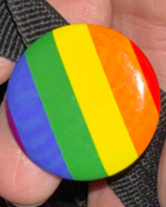
The University of Georgia School of Law’s First Amendment Clinic successfully defended a student’s right to express their identity by wearing rainbow buttons in school.
During the 2025-2026 school year, the Effingham County School District’s student dress code prohibited clothing or accessories with “political messages of any kind.” School officials claimed this barred a middle school student from wearing rainbow pride buttons to school as a form of personal self-expression.
The Clinic and co-counsel Gerry Weber filed a lawsuit arguing that the dress code was unconstitutionally vague because it failed to define what constitutes a “political message.” The lawsuit further asserted that prohibiting a student from engaging in silent, non-disruptive expression in school violates the First Amendment under Tinker v. Des Moines Independent Community School District (1969).
In Tinker, the U.S. Supreme Court famously proclaimed that students do not “shed their constitutional rights to freedom or speech or expression at the school house gate.” The Court in that case ruled that students could not be disciplined for wearing black armbands to school in protest of the Vietnam War because there was no showing that the armbands had created any material disruption of school activities. Known as the Tinker standard, this requirement of material disruption before schools can punish or censor student expression continues to protect students’ speech rights today.
After the Effingham County lawsuit was filed, a new state law went into effect July 1, 2026 requiring Georgia public schools to permit student clothing and accessories that display political messages or symbols to the same extent other messages or symbols are permitted.
The Clinic and Weber worked with the school district to draft a Revised Student Dress Code that complies with this law as well as with the Tinker standard. The district agreed that this will allow our client to wear their rainbow buttons to school going forward.
Thank you to Clinic students Sam Motley and Erin Keough for their work on the complaint and preliminary injunction motion in this case under the supervision of Clinic director Clare Norins.
Case Documents

The Issue
Student First Amendment Rights
The First Amendment protects students and student journalists from censorship and retaliation in public schools and universities. As the Supreme Court has explained, students do not “shed their constitutional right to freedom of speech at the schoolhouse gate.” Read more about our work on behalf of students and student journalists here.
Explore Issue
The Issue
Free Speech
The First Amendment protects the right of private individuals to engage in speech and expression without being censored or punished by the government because of their viewpoint. While the government may constitutionally regulate the time, place, and manner of private speech in public forums it must do so in a viewpoint-neutral manner and, depending on…
Explore Issue