

The University of Georgia School of Law’s First Amendment Clinic scores court victory in challenging a municipality’s online speech restrictions.

Engaged citizen Aaron Booterbaugh was blocked for six months from the City of Morrow’s Facebook Page after he posted critical comments about the Mayor and City Manager. The City subsequently refused to produce records of who it had blocked from its Page and adopted policies that widely restricted the types of comments that users could post.

The Clinic filed a federal civil rights lawsuit on behalf of Mr. Booterbaugh asserting violations of the First Amendment and the Georgia Open Records Act (ORA).

Booterbaugh  explains, “By bringing this action, my hope is to defend, not just me, but the rights of everyone who is affected by governmental overreach by the City of Morrow and to restore the people’s voice.”

The court has now ruled that the City’s social media policies are unconstitutional restrictions on free speech and that the City violated the ORA by failing to produce the blocked-user records in its possession.

The court also found that Mr. Booterbaugh’s First Amendment retaliation claim for being blocked from accessing the City’s Facebook Page may proceed to trial.

Highlights from the court’s 85-page order include the following:

The City’s social media policies are unconstitutional

  • The City of Morrow’s Facebook Page is a limited public forum where restrictions on speech must be reasonable and viewpoint neutral.
  • Prohibiting “abusive,” “racist,” and “hateful” speech and “personal attacks” and “harassment” amounts to unconstitutional viewpoint discrimination.
  • Prohibiting “defamatory” speech, “unsupported accusations,” and “off-topic comments” is unconstitutional because these terms are not defined in the policies and invite arbitrary enforcement by City officials.
  • The City’s policies are unconstitutional because they vest officials with unfettered discretion to entirely block any user who posts “inappropriate material” from accessing the City’s social media pages.

Mr. Booterbaugh’s First Amendment retaliation claim may go to trial

  • There is compelling evidence from which a reasonable jury could find that the Mayor hid Mr. Booterbaugh’s comments and blocked him from the City’s Facebook Page in retaliation for his critical speech. This would amount to impermissible viewpoint discrimination.
  • The City of Morrow may be held liable for the Mayor’s acts because he had unchecked authority to moderate the City’s Facebook Page and therefore acted as the final policy maker for the City, including in making one-off decisions to hide comments or block a user from the Page.

The City violated the Open Records Act 

  • Electronic records on the City’s Facebook account showing which, if any, users were blocked from accessing the City’s Facebook Page fall within the ORA’s definition of a public record, notwithstanding that they are stored on Facebook’s platform.

The court’s order provides the most comprehensive explanation to date from a Georgia court of how government agencies may regulate users’ speech on their social media pages. It is also the first decision in Georgia to hold that the state Open Records Act applies to the electronic records of a government agency, even when they are stored on a third-party’s platform.

Thank you to the following members of the First Amendment Clinic students who advanced the case under the supervision of Clinic director Clare R. Norins:

Fall 2024: Carsen Christy, Jackson Rowe
Spring 2024: Jessica Cooper, Jennifer Danker, Devon Hammock, Samaria Henry
Fall 2023: Jessica Cooper, Alex Cross, Eli Klenberg
Spring 2023: Jennifer Danker, Delaney Davis, Warren “Ren” Schmitt
Fall 2022: Aradhana Chandra
2022-2025: Allyson Veile, Ashley Fox, Lindsey Floyd, and Ward Evans

A blue screen with a large button titled "Block" at the center with a mouse clicker over it.

The Issue

Social Media Blocking

The First Amendment protects speech on social media platforms that have been designated as public forums by government officials or agencies. Government officials cannot block individuals from accessing their social media pages simply because the government dislikes or disagrees with their speech. Read more about our work protecting citizen speech here.

Explore Issue
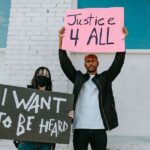
An image of two protesters holding up signs. The man on the right holds a sign that says "Justice 4 All". The woman on the left weras a face mask and her sign says "I want to be heard".

The Issue

Free Speech

The First Amendment protects the right of private individuals to engage in speech and expression without being censored or punished by the government because of their viewpoint. While the government may constitutionally regulate the time, place, and manner of private speech in public forums it must do so in a viewpoint-neutral manner and, depending on…

Explore Issue
Boardroom meeting debate.

The Issue

Speech-Based Retaliation

The First Amendment prohibits the government from retaliating against individuals exercising their rights to free speech, press, assembly, and petition of the government for redress of grievances. Read more about our work to address retaliation against individuals who have engaged in protected expression, newsgathering, and petitioning.

Explore Issue