Georgia Journalism Attorney Ward Evans successfully briefed and argued a motion in Tatnall County State Court to allow The Georgia Virtue to audio record a civil corruption trial, while Clinic fellow Christina Lee obtained an order to unseal documents filed in Gwinnett County Superior Court.
Keep ReadingDefending citizen’s right to call 911
The University of Georgia School of Law’s First Amendment Clinic represented a south Georgia resident on claims of First Amendment retaliation and malicious prosecution against officers in the Camden County Sheriff’s Office. The plaintiff was criminally prosecuted for exercising her rights of free speech and petition when she called Camden County 911 to request help stopping gunshots near her home.
Keep ReadingClinic fellow Christina Lee weighs in on defamation drama
Legal Fellow Christina Lee recently published an article and was interviewed for a podcast, both on SLANDERTOWN.com, about actor Justin Baldoni’s defamation lawsuits against his co-star Blake Lively and the New York Times. Lee was also a guest panelist for the Media Law Resource Center’s February 18, 2025 Zoom discussion about the litigation.
Keep ReadingNorins moderates “Threats to Journalism” at AALS annual meeting
Clinic director Clare R. Norins moderated a panel discussion on “Identifying and Addressing Current Threats to Journalism” at the Association of American Law Schools 2025 Annual Meeting.
Keep ReadingAnti-SLAPP victory for community residents who petitioned on matters of public concern
The University of Georgia School of Law’s First Amendment Clinic successfully defended the right of four homeowners in Atlanta’s Lakewood Heights Historic District to speak on matters of public concern affecting development in their neighborhood. These neighbors, who include Heather Graybill, Paula Kupersmith, and Zachary Murray, were sued by Atlanta landlord Omar Ali for engaging in speech and petitioning that did not support his development interests. After the court dismissed multiple claims in response to the homeowners’ motion to strike the lawsuit as a Strategic Litigation Against Public Participation (SLAPP), Ali voluntarily withdrew the rest of his lawsuit.
Keep ReadingMississippi Protesters Guide
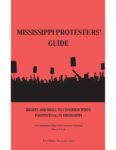
The Mississippi Protesters’ Guide provides individuals and groups who are considering organizing or engaging in protest activity with a reader-friendly, plain-language roadmap outlining some of their legal rights and risks.
Keep ReadingNorins & Bailey publish in Washington & Lee Law Review Online
Clinical Associate Professor and First Amendment Clinic director Clare R. Norins and clinic alum Mark L. Bailey (JD ’22) critique the Supreme Court’s new state-action test in Stitch Incoming: Lindke v. Freed’s Impact on Social-Media-Blocking Litigation, 82 Wash. & Lee L. Rev. Online 172 (2024).
Keep ReadingFall 2024 Clinic Presentations
During the Fall 2024 semester, the First Amendment Clinic presented trainings on election safety for journalists, student press freedoms, Georgia’s sunshine laws, and First Amendment auditors’ right to record.
Keep ReadingOldaker v. Giles – Clinic obtains relief for survivors of alleged medical abuse suffered while in ICE custody
The University of Georgia School of Law’s First Amendment Clinic and Community HeLP Clinic, together with co-counsel, represented fifteen women who alleged medical abuse, neglect, and retaliation in violation of their First Amendment rights while detained in the custody of U.S. Immigration & Customs Enforcement (ICE) at the Irwin County Detention Center (ICDC) in Ocilla, Georgia.
Keep ReadingOpen records and open meetings in Georgia
Georgia’s Open Records Act and Open Meetings Act respectively codify the presumption that public records should be made available for public inspection without delay and that government agencies must hold the meetings of their governing bodies open for public observation.
Keep ReadingPre-publication review guide: a media law resource for journalists and attorneys
Pre-publication review (also known as “pre-pub” or “vetting”) is the process of reviewing news articles, scripts, and footage prior to publication to identify and address or mitigate legal concerns.
Keep ReadingClinic receives a $5 million endowment gift from the Stanton Foundation
The University of Georgia School of Law is pleased to share news of its largest gift in history – a $5 million donation from the Stanton Foundation to support the ongoing operations of the First Amendment Clinic.
Keep ReadingCourt transparency: Clinic attorneys prevail in two courts
Georgia Journalism Attorney Ward Evans successfully briefed and argued a motion in Tatnall County State Court to allow The Georgia Virtue to audio record a civil corruption trial, while Clinic fellow Christina Lee obtained an order to unseal documents filed in Gwinnett County Superior Court.
Keep ReadingDefending citizen’s right to call 911
The University of Georgia School of Law’s First Amendment Clinic represented a south Georgia resident on claims of First Amendment retaliation and malicious prosecution against officers in the Camden County Sheriff’s Office. The plaintiff was criminally prosecuted for exercising her rights of free speech and petition when she called Camden County 911 to request help stopping gunshots near her home.
Keep ReadingClinic fellow Christina Lee weighs in on defamation drama
Legal Fellow Christina Lee recently published an article and was interviewed for a podcast, both on SLANDERTOWN.com, about actor Justin Baldoni’s defamation lawsuits against his co-star Blake Lively and the New York Times. Lee was also a guest panelist for the Media Law Resource Center’s February 18, 2025 Zoom discussion about the litigation.
Keep ReadingNorins moderates “Threats to Journalism” at AALS annual meeting
Clinic director Clare R. Norins moderated a panel discussion on “Identifying and Addressing Current Threats to Journalism” at the Association of American Law Schools 2025 Annual Meeting.
Keep ReadingAnti-SLAPP victory for community residents who petitioned on matters of public concern
The University of Georgia School of Law’s First Amendment Clinic successfully defended the right of four homeowners in Atlanta’s Lakewood Heights Historic District to speak on matters of public concern affecting development in their neighborhood. These neighbors, who include Heather Graybill, Paula Kupersmith, and Zachary Murray, were sued by Atlanta landlord Omar Ali for engaging in speech and petitioning that did not support his development interests. After the court dismissed multiple claims in response to the homeowners’ motion to strike the lawsuit as a Strategic Litigation Against Public Participation (SLAPP), Ali voluntarily withdrew the rest of his lawsuit.
Keep ReadingMississippi Protesters Guide
The Mississippi Protesters’ Guide provides individuals and groups who are considering organizing or engaging in protest activity with a reader-friendly, plain-language roadmap outlining some of their legal rights and risks.
Keep ReadingNorins & Bailey publish in Washington & Lee Law Review Online
Clinical Associate Professor and First Amendment Clinic director Clare R. Norins and clinic alum Mark L. Bailey (JD ’22) critique the Supreme Court’s new state-action test in Stitch Incoming: Lindke v. Freed’s Impact on Social-Media-Blocking Litigation, 82 Wash. & Lee L. Rev. Online 172 (2024).
Keep ReadingFall 2024 Clinic Presentations
During the Fall 2024 semester, the First Amendment Clinic presented trainings on election safety for journalists, student press freedoms, Georgia’s sunshine laws, and First Amendment auditors’ right to record.
Keep ReadingOldaker v. Giles – Clinic obtains relief for survivors of alleged medical abuse suffered while in ICE custody
The University of Georgia School of Law’s First Amendment Clinic and Community HeLP Clinic, together with co-counsel, represented fifteen women who alleged medical abuse, neglect, and retaliation in violation of their First Amendment rights while detained in the custody of U.S. Immigration & Customs Enforcement (ICE) at the Irwin County Detention Center (ICDC) in Ocilla, Georgia.
Keep ReadingOpen records and open meetings in Georgia
Georgia’s Open Records Act and Open Meetings Act respectively codify the presumption that public records should be made available for public inspection without delay and that government agencies must hold the meetings of their governing bodies open for public observation.
Keep ReadingPre-publication review guide: a media law resource for journalists and attorneys
Pre-publication review (also known as “pre-pub” or “vetting”) is the process of reviewing news articles, scripts, and footage prior to publication to identify and address or mitigate legal concerns.
Keep ReadingClinic receives a $5 million endowment gift from the Stanton Foundation
The University of Georgia School of Law is pleased to share news of its largest gift in history – a $5 million donation from the Stanton Foundation to support the ongoing operations of the First Amendment Clinic.
Keep Reading